Federal Reserve

Next Meeting Date:

April 29, 2026

-- DAYS
-- HRS
-- MINS

Current Rate: 3.62%

Theoretical: 4.51%
Policy Stance: Accommodative
View Model FRB/US →

*For interpretation and methodology of probabilities, click here.

European Central Bank

Next Meeting Date:

April 30, 2026

-- DAYS
-- HRS
-- MINS

Current Rate: 2.00%

Theoretical: 4.30%
Policy Stance: Accommodative
View Model NAWM/NMCM →
Rate Change Probabilities*
Rate Hike
54.0%
No Change
46.0%
Rate Cut
0.0%

*For interpretation and methodology of probabilities, click here.

Bank of England

Next Meeting Date:

April 30, 2026

-- DAYS
-- HRS
-- MINS

Current Rate: 3.75%

Theoretical: 6.26%
Policy Stance: Accommodative
View Model COMPASS →
Rate Change Probabilities*
Rate Hike
62.0%
No Change
38.0%
Rate Cut
0.0%

*For interpretation and methodology of probabilities, click here.

Reserve Bank of Australia

Next Meeting Date:

May 5, 2026

-- DAYS
-- HRS
-- MINS

Current Rate: 4.10%

Theoretical: 5.62%
Policy Stance: Accommodative
View Model MARTIN →
Rate Change Probabilities*
Rate Hike
89.4%
No Change
10.6%
Rate Cut
0.0%

*For interpretation and methodology of probabilities, click here.

Bank of Japan

Next Meeting Date:

April 27, 2026

-- DAYS
-- HRS
-- MINS

Current Rate: 0.30%

Theoretical: 0.83%
Policy Stance: Neutral

Reserve Bank of India

Next Meeting Date:

April 9, 2026

-- DAYS
-- HRS
-- MINS

Current Rate: 5.25%

Theoretical: 7.08%
Policy Stance: Accommodative

Bank of Canada

Next Meeting Date:

April 29, 2026

-- DAYS
-- HRS
-- MINS

Current Rate: 5.25%

Theoretical: 3.92%
Policy Stance: Restrictive
🌍

Global Outlook

Comparative Analysis

Cross-jurisdictional

Average Rate: 3.56%

Policy Divergence: Moderate
Synchronization: 35%

European Central Bank — Expected Rate Path

Market-implied policy rate trajectory based on futures-derived meeting probabilities
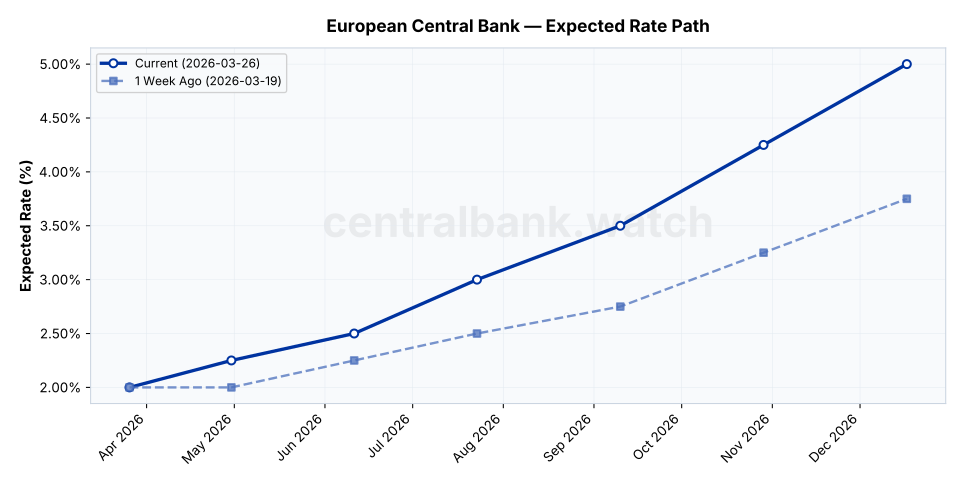
European Central Bank Expected Rate Path
Rate Path Analysis
Next Meeting European Central Bank

April 30, 2026

Shows the most likely policy rate at each future meeting date. Compares current expectations with those from 1 week and 4 weeks ago.

Detailed Analysis →

Bank of England — Expected Rate Path

Market-implied Bank Rate trajectory based on SONIA futures-derived meeting probabilities
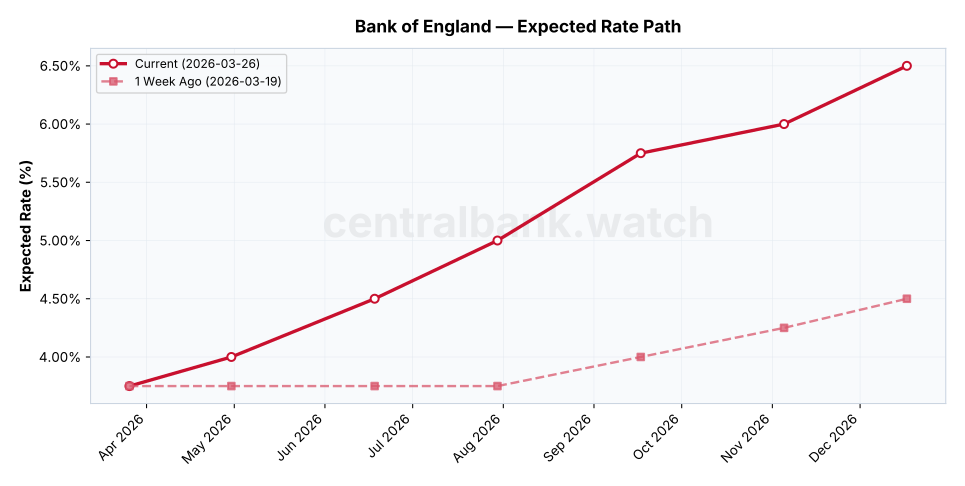
Bank of England Expected Rate Path
Rate Path Analysis
Next Meeting Bank of England

April 30, 2026

Shows the most likely policy rate at each future meeting date. Compares current expectations with those from 1 week and 4 weeks ago.

Detailed Analysis →

Reserve Bank of Australia — Expected Rate Path

Market-implied Cash Rate trajectory based on ASX futures-derived meeting probabilities
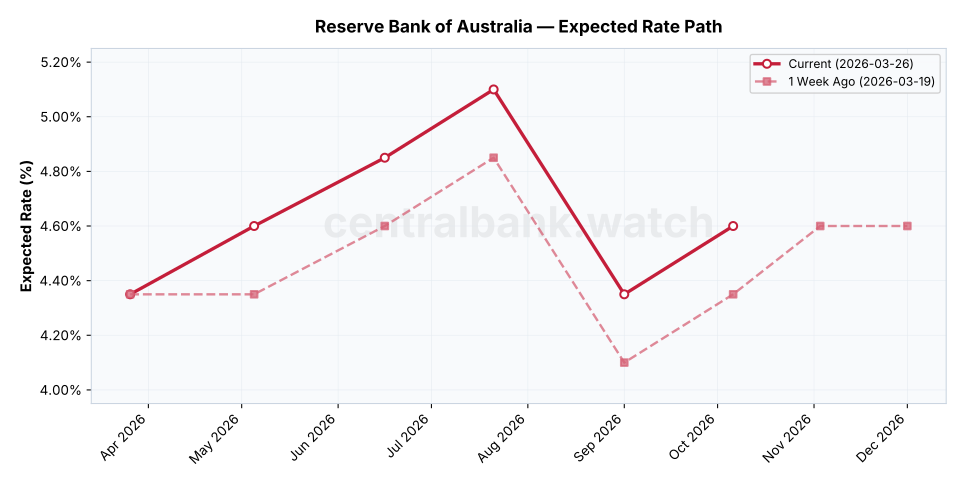
Reserve Bank of Australia Expected Rate Path
Rate Path Analysis
Next Meeting Reserve Bank of Australia

May 5, 2026

Shows the most likely policy rate at each future meeting date. Compares current expectations with those from 1 week and 4 weeks ago.

Detailed Analysis →

Global Rate Outlook

Expected rate change paths (in basis points from current rate) for ECB, BoE, and RBA
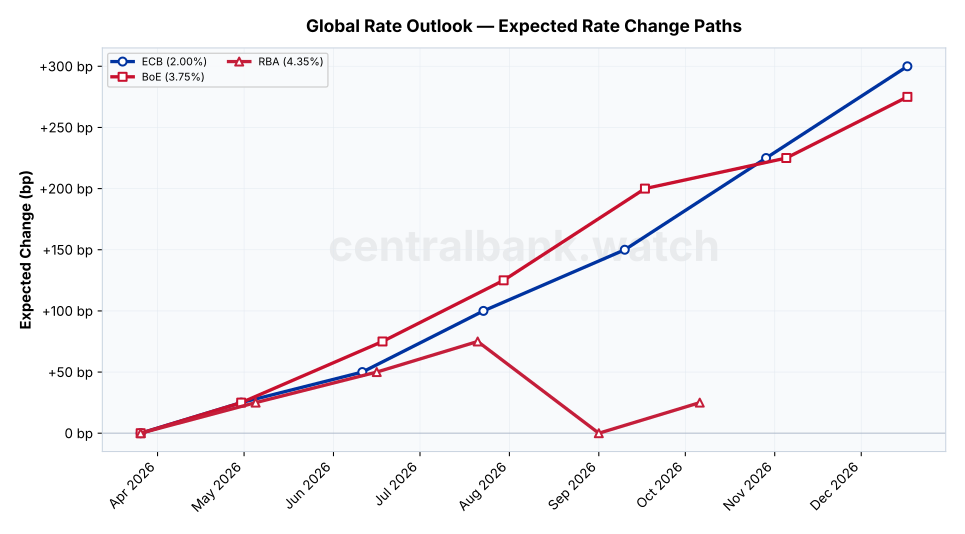
Global Rate Outlook
Policy Divergence Tracker
Current Policy Stance
  • European Central Bank: Accommodative
  • Bank of England: Accommodative
  • Reserve Bank of Australia: Accommodative
Global Analysis →

Latest Central Bank News

Real-time news monitoring across Federal Reserve, ECB, and Bank of England

Research Framework & Methodology

Advanced analytical foundations for institutional-grade monetary policy expectations

Research Motivation & Strategic Goals

The accurate measurement of market expectations regarding central bank policy decisions has become increasingly crucial for monetary policy transmission, financial market stability, and macroeconomic forecasting.

  • Enhanced Accuracy: Improving probability calculation precision through adaptive parameters
  • Cross-Jurisdiction Application: Extending methodologies beyond Federal Reserve analysis
  • Real-time Integration: Providing institutional-grade analytics with minimal latency
Enhanced Probability Methodology

Our proprietary approach builds upon established futures-based probability calculations, incorporating advanced statistical techniques for superior accuracy and market responsiveness.

  • Adaptive Sigma Parameters: Dynamic volatility adjustments based on time-to-meeting
  • Status Quo Bias Modeling: Accounting for central bank decision inertia
  • Multi-Market Integration: Cross-referencing Fed, ECB, and BoE futures markets